Responsive Ad Slot

Latest

Japan Focus

Peace Philosophy Centre

Gender

ジェンダー

環境

Environment

日本/アジア

Japan and Asia

Showing posts with label Social Justice. Show all posts

Pete Seeger Labelled 'Subversive' After Speaking Out Against Plan to Deport Japanese

Posted on Sunday, December 20, 2015 No comments
from Common Dreams

Newly released 1,700-page FBI file shows the US government 'went to lengths' to track beloved folk icon
One FBI agent said Almanac Singers, which included Seeger and Woody Guthrie, "were active singing Communist songs and spreading propaganda."(Photo: D. Steinberg/AP)
Beloved singer and activist Pete Seeger inspired countless worldwide with his songs about peace and equality, and—according to his newly released FBI file—he also inspired the ire of the U.S. government, which spied on the folk icon for decades and labelled him a "subversive" for his Communist sympathies.
The 1,700-page tome, handed over by the National Archives under the Freedom of Information Act, was revealed in an Associated Press report on Saturday.
Among the revelations was that the U.S. military launched an investigation into the young singer in 1942 after Seeger sent a letter to the California American Legion condemning the group's resolution "advocating deportation of all Japanese, citizens or not, and barring all Japanese descendants from citizenship."
"We're fighting precisely to free the world of such Hitlerism, such narrow jingoism," Seeger wrote in the letter, which was penned as the U.S. government was actively forcing Japanese-American citizens to live in government internment camps.

After scouring his letters and school records, and interviewing family members, ex-landlords, as well as friend Woody Guthrie, the U.S. military eventually concluded that Seeger's association with known communists and his Japense-American fiancee, the late Toshi Seeger, "pointed to a risk of divided loyalty," AP reports.
In one excerpt, the investigator who interviewed Guthrie reportedly noted the singer's guitar, famously emblazoned with "This Machine Kills Fascists." Of the inscription, the investigator wrote: "It is this agent's opinion that this bears out the belief that the Almanac Players"—of which Guthrie and Singer belonged—"were active singing Communist songs and spreading propaganda."
AP notes that the FBI went to "lengths...to keep tabs on the singer's travels, performances and rally appearances at least into the 1970s." Seeger, who died in January 2014, was an active singer and activist until he passed at age 94.
According to the reporting, the National Archives plan to release additional Seeger files in the future. 

The U.S. Wages a Dangerous Campaign in Venezuela Elections

Posted on Monday, December 7, 2015 No comments
Related:  See the election results here:
http://tokyoprogressive-news.blogspot.jp/2015/12/opposition-landslide-in-venezuela.html
 
Mark Weisbrot
December 1, 2015
Huffington Post
 
The U.S. campaign to delegitimize Venezuela’s December 6th parliamentary elections can only encourage violence by a right-wing opposition that has repeatedly refused to peacefully accept the results of Venezuela’s democratic process. The U.S. government, which initially refused to recognize the results of Venezuela’s 2013 Presidential elections, is seeking to discredit Sunday’s vote if the conservative opposition fails to win a two-thirds parliamentary majority. 


Venezuelan President Nicolás Maduro. The U.S. government that refused to recognize his election and supported the failed coup against his predecessor, Hugo Chavez, is lecturing Venezuela on the sanctity of elections., UN Photo/Jess Hoffman
 
 The campaign for Venezuela's Dec. 6 National Assembly election is only three weeks long, but in the United States it started about six months ago with leaksby anonymous U.S. officials making unsubstantiated allegations that Venezuelan officials were running a "cartel." More recently, relatives of Venezuela's first lady Cilia Flores were arrested and taken (not extradited) to the U.S. after being lured by DEA agents to Haiti. Then last week, when an opposition politician was shot and killed, the secretary general of the Organization of American States, Luis Almagro, immediately joined Washington in trying to make it look like a political murder. Within a day, evidence from investigations appeared to show that the victim was likely a gang member killed by a rival gang.

To understand the strategy of the U.S. government and its allies -- including Almagro and now the president-elect of Argentina -- we have to look at what happened in the 2013 Venezuelan presidential election. In 2013, President Maduro won by 1.5 percentage points, but there was absolutely no doubt about the result. Because of the extensive safeguards in the voting process -- including an immediate audit, with witnesses, of a random sample of 54 percent of voting stations -- former U.S. president and election expert Jimmy Carter called Venezuela's election system "the best in the world."

But the Venezuelan opposition, not for the first time, rejected the result and claimed fraud, taking to the streets with violent demonstrations. The U.S. government, with almost no allies, backed the protestors by refusing to recognize the election results. The stage was set for increasingly violent conflict, but South American governments stepped in and publicly pressuredWashington to join the rest of the world in accepting the results.
Now you can see where this is going, and possibly even predict the near future. The Venezuelan opposition is currently leading the government by a sizable margin in most national polls -- although this appears to be narrowing in the past week or so -- and this is what the U.S. and international media have been reporting. But these polls do not necessarily indicate who is going to win the National Assembly, or by how much. The margin of victory is very important because, for example, a two-thirds majority will give the legislature much more power.

The government party (the United Socialist Part of Venezuela, or PSUV) has millions of members and has for years demonstrated an ability to mobilize its voters. The opposition has no comparable organization or campaign, and this is a non-presidential election. Also, sparsely populated (mostly rural) states have more representation per voter than those with higher populations. In the U.S., 584,000 people or so in Wyoming get the same number of senators as almost 39 million Californians. In Venezuela, there is only one legislative chamber, so the small states' disproportional power is not as great as in the U.S. system. But it is significant, and unlike in the U.S., where the rural vote tends to be right wing, in Venezuela it leans more toward the Chavistas.

The result is that, win or lose, the opposition is very unlikely to do as well as the national polls indicate. So when the opposition is "surprised" by the results, we can expect claims of fraud. If the last 14 years of extralegal efforts (supported by Washington) to topple the government are any guide, the rejection of election results could turn violent. Last weekend, the head of Venezuela's leading opposition newspaper, Miguel Henrique Otero of El Nacional, declaredthat the opposition will take to the streets if they do not like the results.
From the U.S. Congress, the Obama administration, allied non-governmental organizations and Almagro, there have been demands that the OAS be allowed to monitor Venezuela's elections. But it is very clear after what the OAS has done repeatedly in Haiti -- including the 2011 reversal of presidential election results without a recount or even a statistical test -- that OAS monitors cannot be considered neutral.
Washington's current campaign is targeted at the Latin American and hemispheric media, in order to increase political pressure on governments to not do what they did in 2013: publicly shame the U.S. into accepting the results of democratic elections. There will be international campaign events, including U.S. newspaper editorials, Senate hearings and more, every day in the next week and following the elections.

It is bad enough that all of these foreign actors are campaigning in another country's elections. But by attempting to delegitimize -- with no evidence of possible fraud -- the actual election results, they are promoting instability and possible violence.
[Mark Weisbrot is co-director of the Center for Economic and Policy Research, Washington, D.C. Follow him on twitter at http://www.twitter.com/MarkWeisbrot.]

Opposition Landslide in Venezuela - Maduro Accepts Results

Posted on No comments

On lâche rien: 諦めないぞ!。

Posted on Tuesday, December 1, 2015 No comments
魂におけるユートピア主義者、精神におけるノマドであれ。
私たちは皆「世界の市民」です。
私たちの闘いは同じ、夢も同じ、理想も同じです。
何も手放さないぞ!
北フランス出身のSaltimbanksのバンドより、
尊敬と友情と連帯をこめて。

This is a very popular French video with Japanese subtitles.

日本語の字幕


This is the English version:

How the News Media Sees Okinawa

Posted on No comments
Originally published in the FCCJ #1, Nov 2015
 No1-2015-11Onaga
Islands in the streaming news
Okinawa Governor Takeshi Onaga meets the press.

As the face-off between the prefectural and central 
governments continues, the good news 
is that press interest has increased 
and coverage has improved.

by Michael Penn
The confrontation between the leaders of the U.S.-Japan alliance and the prefectural government of Okinawa over the relocation of the U.S. Marine airbase at Futenma and the plan to construct a new airbase at Henoko has many dimensions – political, military, legal, historical, ethnic and economic. These have affected the way that it is covered by the local and global news media.
Okinawa Governor Takeshi Onaga is clearly aware of the importance of reaching out to the foreign media – as demonstrated by his late-May visit to Washington DC, his September speech at the UN Human Rights Council in Geneva, and, indeed, by his two press conferences this year at the FCCJ. Onaga understands that shaming the Japanese government before the eyes of the international community is one of the key weapons at his disposal.
But keen awareness of the potential power of the media is also to be found on the other side of the political spectrum as well. Novelist and former NHK board member Naoki Hyakuta declared to admiring conservative lawmakers at a ruling party study meeting in June that the two major newspapers of Okinawa should be “crushed” in response to their support for the anti-base political views. In central Naha even now one can find a handful of activists outside these newspapers’ headquarters making similar calls.

Onaga understands that shaming the 
Japanese government before the eyes of 
the international community is one of the 
key weapons at his disposal.

Ryukyu Shimpo and Okinawa Times dominate the newspaper landscape in Okinawa. With two major newspapers grappling with one another within a relatively isolated prefecture, it might be expected that one of them would naturally trend more to the liberal side and one represent more conservative voices. In fact, however, both papers are deeply committed to their anti-base movement. While there is indeed some portion of the Okinawan population that is pro-base, or at least not very concerned about the U.S. military presence, it would appear that this constituency is not large enough to support a major newspaper.
It should also come as no surprise that among print newspapers in any language, it is only the Ryukyu Shimpo and Okinawa Times that treat Henoko base construction as an issue of deep concern and seriousness. Without a doubt they offer the most regular and detailed accounts of the confrontation, and they are an essential source for anyone closely following developments on the ground.
For every other print media outlet in whatever language, the Futenma relocation drama is a peripheral matter, usually updated only when a major political figure makes a key statement or when an event of special significance takes place.
CONSERVATIVE NATIONAL NEWSPAPERS LIKE the Yomiuri Shimbun and the Sankei Shimbun have never wavered in their commitment to seeing the U.S. Marine airbase be built. For them it is a simple issue of national security and a commitment made to the U.S. allies. In the case of the Yomiuri, one editorial could stand in for a hundred others, as the message is always that base construction is necessary and anyone opposing it is both irresponsible and obstructionist. As they put it on Oct. 14: “The relocation to the Henoko district is the sole, realistic option chosen following many years of discussions among the Japanese and U.S. governments and local governments of Okinawa. Onaga continues taking his noncompliant stance, providing no alternative plans whatsoever.”
The more liberal national dailies 
like the Asahi Shimbun and the Mainichi Shimbun
however, could probably be best 
defined by their wavering. 
For the far-right Japanese media, the answers are also very simple. They insist that the anti-base movement does not represent the views of the majority of the Okinawan people, but rather are led by a handful of mostly Communist political activists from the main islands. They also believe that hidden Chinese agents and their collaborators are secretly guiding the anti-base movement.
The more liberal national dailies like the Asahi Shimbun and the Mainichi Shimbun, however, could probably be best defined by their wavering. They are certainly willing to give some space to anti-base views in their pages, especially in recent months, but they tend to be much more lukewarm than the local Okinawa papers. For example, these national newspapers appear to take more seriously the view that U.S. military bases are needed in the southwestern prefecture as an element of deterrence policy vis-a-vis China.
In contrast, the dominant view within Okinawa itself seems to be that China should be seen more as a trading partner than as an inevitable military threat. Governor Onaga himself made this point at his most recent press conference at the FCCJ – and it is often forgotten that Onaga hails from the more conservative political camp within his prefecture and was formerly a leader of the local chapter of the ruling Liberal Democratic Party.
THE INTERNATIONAL NEWS MEDIA on the whole tends to show a reasonable degree of sympathy toward the Okinawans in their struggle to prevent the construction of the airbase at Henoko, though until recently there has also been a notable lack of interest in truly grasping the details of the situation.
Much of the international coverage of the Okinawa issue seems to be driven not by the unique history of the Ryukyu Islands (which is clearly central to Governor Onaga’s view), but rather to each specific media outlet’s general attitude towards the global military posture of the United States. Those international media that are most alienated from U.S. military actions in Iraq or Syria or Yemen, for example, also tend to paint the most negative pictures of the current situation in Okinawa.
An example of this latter approach can be found at RT, the English-language global news service of Russia. In an early-June report on the Okinawa issue, all of the analysis and commentary came from perspectives strongly critical of the United States. The quotation from Nago Mayor Susumu Inamine described the U.S. approach as “typical of colonial policies.” The one international expert introduced in the piece, the New Zealand-based Tim Beal, stated that U.S. bases in Okinawa really have little or nothing to do with any concern in Washington about the defense of Japan.

There are also those . . . whose views are 
nearly identical to what is expressed 
in the Yomiuri Shimbun, or occasionally 
even further to the political right.

Since the Henoko base issue has been in the headlines off and on for some years now, the quality of the international reporting has clearly been improving. An increasing number of foreign journalists are actually visiting the sites of the confrontation and listening directly to the voices of the Okinawans. Interviews with Okinawa-based officials and analysts are now common in news features, and understanding of the local perspective has deepened considerably compared to five or ten years ago.
Direct experience in Okinawa, however, does not always lead in the direction of increased sympathy for the protesters. There are also those – usually associated with U.S. government policymaking circles or the military – whose views are nearly identical to what is expressed in the Yomiuri Shimbun, or occasionally even further to the political right.
One of the more active media commentators of this kind is Robert D. Eldridge, an author of several books related to Okinawa and for some years an official spokesman for the U.S. Marines.
When Governor Onaga made his visit to Washington DC in late May, Eldridge wrote a piece in the Washington Times to introduce him to American policymakers. Eldridge explained that Onaga had been elected “on an anti-base platform dominated by the organizational might of the Communist Party” and that the Okinawa governor “has been groomed for a long time by Chinese leaders” – echoing the claims of the Japanese far right.
Eldridge is also an outspoken critic of the Ryukyu Shimpo and Okinawa Times, describing them as “biased” in their coverage of the U.S. military and accusing them of consistently “focusing on the negative and sensational.”
Eldridge extends his critique to “the national and international media stationed in Tokyo.” Commenting on Naoki Hyakuta’s declaration that the Okinawan newspapers should be “crushed,” Eldridge observed:
“What was most surprising, however, about the ‘Hyakuta Incident’ was not his comments. Nor was it the strongly negative reaction of the two Okinawan newspapers – issuing a protest statement, partnering with their business allies such as the Asahi Shimbun to condemn Hyakuta in their editorials, and speaking before gatherings of their recent allies in the Foreign Correspondents Club of Japan. Rather, it was the slowness of people to realize that the media itself was crudely violating a private citizen’s freedom of speech, all in the name of protecting free speech and a free press.”
LIKE EVERY OTHER CONFLICT in the world, control of the narrative is a crucial element of the struggle for all interested parties.
The Okinawan opponents of the construction of an airbase at Henoko want to tell the story of their people’s unique history: their non-Japanese past, their horrific sacrifice in the Pacific War, their decades spent as a military colony of the United States, and the disproportionate burden of hosting U.S. forces that they carry even today. They insist that their experience teaches them the value of peace, and they don’t believe that the Chinese government has any intention to invade.

Mainstream conservatives sometimes acknowledge 
that Okinawa is disproportionately burdened, 
but for them these grievances must take 
a back seat to the larger alliance priorities.

For mainstream conservatives on both sides of the Pacific, the salient narrative is about the U.S.-Japan alliance – how it protects Japan’s national security, deters potential aggressors, and serves as a necessary hedge against the growing power and aggressiveness of China. Mainstream conservatives sometimes acknowledge that Okinawa is disproportionately burdened, but for them these grievances must take a back seat to the larger alliance priorities. It’s regrettable, but that’s the real world, they assert.
The far right, mostly but not exclusively main-island Japanese, is nearly obsessed with the China threat. They depart from mainstream conservatives by denying that the majority of Okinawans oppose the construction of the Henoko airbase or are suffering significant burdens. They believe that leftist radicals are perpetrating a fraud by sending a handful of professional agitators out to the beach to stage protests, that are then are covered by treasonous journalists. They see the shadowy hand of China everywhere.
Most of the international media picks from among one or more of these three broad narratives in their reporting on the Okinawa issue, although general attitudes toward U.S. power on the global stage also creep in from time to time. 
Michael Penn is president of the Shingetsu News Agency

My Lawsuit vs. the National Diet Press Club

Posted on No comments

 from the #1 Shimbun, September 2015


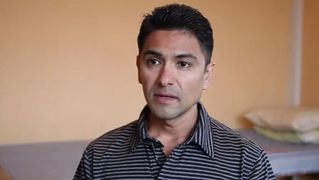
No1-2015-9DietHajime Shiraishi outside the National Diet Press Club building.

Two years after being denied access to a building 
shared by media organizations, 
a journalist tries to keep her case alive.


by Hajime Shiraishi

THE FOUR-STORY NATIONAL DIET Press Club Building, located in the middle of the Kasumigaseki government district and a stone’s throw from the prime minister’s residence, was built in 1969 with a budget of ¥600 million allocated by the House of Representatives. If rents were to be charged to its occupants, it would very likely see revenues of ¥8 billion per year, but the newspapers and TV stations that belong to the Kokkai Kisha Kurabu, the National Diet Press Club, have had the use of its spacious rooms measuring as large as 100m2 for free over the past 45 years. 
In September 2012, I filed a lawsuit against the national government and the Reporters’ Press Club concerning this building. 
Earlier that year, on July 6, I had hoped to do an internet broadcast of a demonstration to be held in front of the prime minister’s official residence, opposing the restart of the Ohi nuclear reactor. Reporting for OurPlanetTV, I was headed for the rooftop of the Reporters’ Club Building, where I thought I could get a superb birds-eye view of the anti-nuclear power demonstrations. Some two weeks earlier, Tokyo Shimbun had run an impressive full-page photograph shot from the same location. 

While the facility was government-owned, 
the reporters’ club had de facto control over its use, 
and it was dead set against use of the building 
by an interloper. 

I was stopped and refused admission at the building’s entrance. “Today, no media other than National Diet Press Club members can enter,” said the custodian, Toshiyuki Saga. “You don’t qualify.” Though I protested, in the end I was unable to gain access.
I consulted an attorney, who used a variety of measures in attempting to negotiate with the office of the House of Representatives, which owns the building, and the club, but was ultimately unsuccessful. While the office of the House of Representatives made an effort to recognize my right to use the roof, it was the club that held the key to the solution, and they were opposed. While the facility was government-owned, the reporters’ club had de facto control over its use, and it was dead set against use of the building by an interloper. Its authority, it seems, effectively supercedes that of the law concerning government property. 
Arguing that banning my entry to shoot a protest demonstration constituted an intrusion on media freedom, as well as discrimination against internet media, I sued the state and the kisha club in September 2012. 
At a hearing, Mr. Saga, who blocked my entry, and who is himself a former political journalist for Kyodo Tsushin, argued that the club was looking out for its members. “For 120 years, since Meiji times, it was not the practice for anyone to relinquish their own vested interests,” he testified, adding that, “Internet media is in competition with television, and magazines compete with newspapers.” 
We have submitted evidence that we believe demonstrates how the National Diet Press Club engages in discriminatory practices as well as how the building’s operators engage in preferential operations. One thing of interest that has come up during the trial is the ambiguous manner in which the building is run.
On one hand, the government has argued that the roof of the reporters’ building is dangerous, and that is has thereby prohibited all photography from the roof, including by members of the club. Paradoxically, the reporters’ club argues that it controls the roof, which it can use “appropriately.” In other words, the two plaintiffs in my lawsuit are arguing from diametrically opposed positions.

Unfortunately, in March of this year, the Tokyo High Court declined to hear our case. The decision, which disregarded the contradictory positions on utilization of the roof, merely stated that OurPlanetTV had no right to its use. 

The building represents the single most convenient 
channel between the government and the mass media, 
and for political journalists is second to none 
in terms of its proximity to the center of power. 

The court also ruled that while Mr. Saga’s treatment was discriminatory, the National Diet Press Club itself had no “illegal motives.” In other words, since the club stated that it had no “illegal motives,” this made it true – an extremely peculiar decision on the part of the court. 
At the end of May we appealed this decision to the Supreme Court. 
During the period when the Democratic Party of Japan was in power we saw changes in attitudes toward the press. Press conferences by ministers were made more open, and the closed nature of reporters’ clubs underwent considerable liberalization. Yet the National Diet Press Club maintains its dogged refusal to allow access to the roof of its building, with its ideal bird’s-eye perspective. 
The building represents the single most convenient channel between the government and the mass media, and for political journalists is second to none in terms of its proximity to the center of power. 
It is to be hoped that the Supreme Court, one of the three pillars of a government that maintains separation of powers, will understand the significance of the problem and issue a fair judgment regarding Japan’s media. 
Hajime Shiraishi outside the Diet Reporters’ Club
Hajime Shiraishi is the director of OurPlanetTV, a non-profit, alternative news site. www.ourplanet-tv.org

Published in: September 2015

Exclusive: Detained Honduran Woman, Moved to Mostly Male TX Prison After Hunger Strike, Speaks Out

Posted on Monday, November 30, 2015 No comments
     
Image Credit: Human Rights First

At the end of October, 27 immigrant women detainees began a hunger strike, demanding an end to mistreatment and their immediate release from the T. Don Hutto detention center near Austin, Texas. Most of the women were asylum seekers from Central America, which has seen a surge in migrants fleeing violence and abuse. The hunger strike reportedly surged to as many as 125 women, even as immigration officials denied it was taking place. Then, the hunger strikers said they faced retaliation. At least two women who participated in the hunger strike were transferred from the women’s detention center near Austin to an overwhelmingly male detention center run by the GEO Group, another major private prison operator, in Pearsall, Texas, nearly 200 miles away. On Thursday, one of those two women, Amalia Leal, a Honduran asylum seeker, called Democracy Now!’s Amy Littlefield from detention. She has been detained for seven months after re-entering the United States following a prior deportation. "We came to seek refuge, and instead we found punishment," Leal said.
To see our interview with Francisca Morales Macías, a Mexican domestic abuse survivor who was transferred along with Amalia Leal after taking part in the hunger strike, click here.

Paris COP 21 by Danny Chivers

Posted on No comments
From the New Internationalist and Democracy Now
Poster in Paris


Crowds celebrate in PdlR.jpg [Related Image]
The crowd celebrates in Place de la Republique. by Danny Chivers/New Internationalist
The French government’s attempts to crack down on climate protesters have only made their voices louder, reports Danny Chivers.
Protest is currently banned in Paris. Any outdoor gathering of more than two people with a political message has been strictly prohibited under ‘state of emergency” government powers, following the 13 November terror attacks. Anyone taking part in an illegal demonstration could face fines of $3,972 or up to two months in prison.
The French government imposed the protest ban supposedly in the name of public safety, and yet – as campaigners have pointed out – large gatherings such as football matches and Christmas markets have been allowed to go ahead. Groups of people, it seems, only become hazardous when they have a political point to make. The government has seemed determined to use these powers freely, putting a number of climate campaigners under house arrest, raiding activist squats and attempting to prevent two separate bicycle convoys from reaching Paris.
So protest has been banned, which means if you thought you saw a protest today, you must have been mistaken. If you were at the park opposite the Bataclan at 9 o’clock this morning, where Indigenous peoples from North America and the South Pacific led songs, prayers and blessings for the lives lost in the Paris attacks, and also for the defence of Mother Earth against the extractive industries – well, that wasn’t a protest. It was a ceremony, so no problem there.
Then, at noon, if you happened to see ten thousand people forming a human chain along the pavement from Place de la République to Nation, holding banners and placards demanding climate justice – well, that can’t have been a protest either. Because, you know, protest is banned. Even when large groups started walking up and down the pavement, waving placards, chanting slogans, throwing giant inflatable ‘cobblestones’ in the air and dancing to a brass band – it can’t possibly have been a demonstration, because we all know that would be strictly illegal and immediately shut down. Wouldn’t it?
Of course, another possibility is that the French protest ban is simply unenforceable in the face of a large enough group of determined and passionate people with sufficient public sympathy on their side. Climate change is now so serious – and so urgent – that thousands were willing to risk arrest in Paris today to stand up for that cause, with the support of millions of observers around the world. In the event, there was little that the French state could do to prevent this – at least for the five hours that I was out on the streets observing the protests unfold.

Indigenous peoples and their allies in the human chain. Danny Chivers / New Internationalist

Having succeeded in forming the human chain, many people flooded back to Place de la République, to assemble with their placards and banners (again, in apparent infringement of the protest ban). Groups of protesters, chanting ‘l’etat d’urgence, c’est le climat’ (‘the state of the emergency is the climate’) and ‘Si on marche pas, ce ne marchera pas’ (‘if we don’t march, it’s not going to work’ – it sounds better in French!), began to take over the roundabout around the Place, bit by bit. Within half an hour, the traffic had been banished and the road was filled with dancing and cheering people.
Their message was clear, from their chants and their banners: as governments prepare for a climate summit that will deliver, at best, a catastrophic 2.7 degrees of global warming, the voice of the public is more important than ever. My New Internationalist colleagues and I spoke to people in the human chain whose lands and livelihoods were already being destroyed by rising sea levels, melting ice, and the pollution from fossil fuel extraction. We met people today who had lost friends in storms exacerbated by carbon pollution. Climate change is no longer a future threat – it is an unfolding act of violence in which rich governments and corporations are actively complicit. We cannot sit back and expect them to solve this problem for us; we need serious action by the public to challenge the political status quo.

The 2pm occupation of Avenue de la Republique Danny Chivers / New Internationalist

Today, as millions marched around the world, the crowds in Paris also refused to be silenced. At 2.00pm, several thousand people left the Place and marched – yes, marched – down Avenue de la République. After a few hundred metres, they were met by a wall of riot police. But rather than pick a fight, the crowd simply filled the road, leaving a clear space between themselves and the police, and chanted in defiance. Some gas grenades from the police – and one small charge – failed to deter the crowd, who remained there chanting ‘liberté’ and ‘police state’ for a good 15 minutes. Then, having seemingly decided they’d made their point, they turned and marched back to the square, to rejoin the occupation there. As I left Place de la République at 2.30pm, the crowds still filled the square.
A few weeks ago, we were expecting hundreds of thousands of people to take part in a legal march in Paris today. This would have been a powerful show of strength from the climate movement, but arguably what happened today was even more powerful. Thousands of people were willing to risk arrest and police violence in order to demand justice for those most affected by climate change.
By seeking to silence political expression, the French government has only succeeded in making it louder.
Follow more events at COP21 in Paris on our New Internationalist media web hub.
- See more at: http://newint.org/blog/2015/11/29/what-paris-protest-ban/#sthash.yvMfgztt.dpuf


Photo: Amy Goodman locates Democracy Now! team members as police use tear gas on climate protesters in Paris. For the next two weeks, we broadcast live from the COP21 climate negotiations in France. Tune in 8AM ET daily at democracynow.org as we speak with Naomi KleinPablo SolónJosé Bové and indigenous climate activists from around the world.


It’s Official - NSA Did Keep Its E-Mail Metadata Program After It 'Ended' In 2011

Posted on Saturday, November 28, 2015 No comments

Cyrus Farivar
November 20, 2015
Ars Technica
 
The New York Times gets a new NSA doc confirming what some had long suspected.


NSA, Trevor-Paglen
 
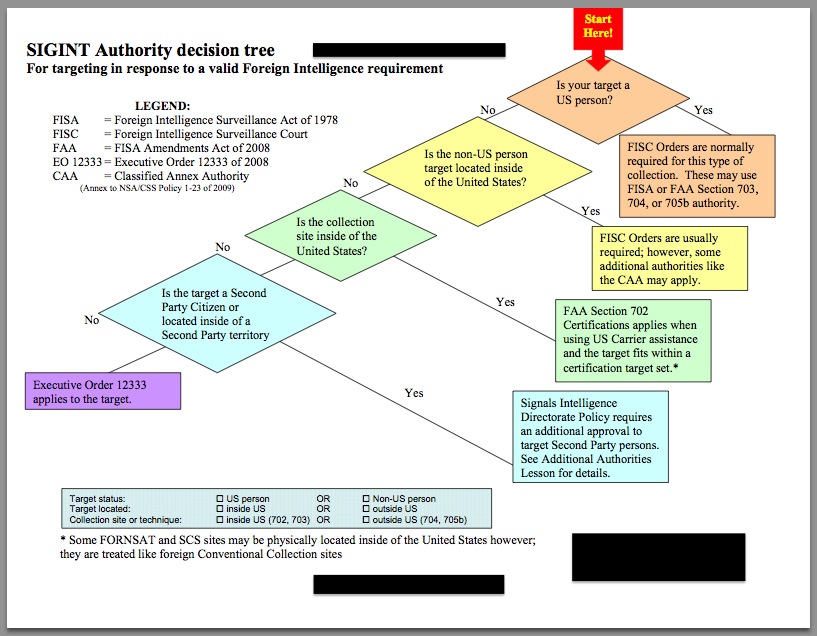
 Though it was revealed by Edward Snowden in June 2013, the National Security Agency's (NSA) infamous secret program to domestically collect Americans’ e-mail metadata in bulk technically ended in December 2011.  Or so we thought. A new document obtained through a lawsuit filed by The New York Times confirms that this program effectively continued under the authority of different government programs with less scrutiny from the Foreign Intelligence Surveillance Court (FISC).
The bulk electronic communications metadata program was initially authorized by the government under the Pen Register and Trap and Trace (PRTT) provision, also known as Section 402 of the Foreign Intelligence Surveillance Act. The Times’ document, a previously-top secret National Security Agency Inspector General (NSA IG) report from January 2007, contains a lot of intelligence jargon but crucially notes: "Other authorities can satisfy certain foreign intelligence requirements that the PRTT program was designed to meet."
While such a theory had been pushed previously by some national security watchers, including Marcy Wheeler, this admission had yet to be officially confirmed. Wheeler argued that not only do the post-PRTT programs achieve the same goal, but she believed they were in fact more expansive than what was previously allowed.
The bulk metadata program, which began in secret under authorization from the FISC in 2004, allowed the NSA to collect all domestic e-mail metadata including to, from, date, and time. When this program was revealed by the Snowden leaks in The Guardian, the government said that the PRTT program had been shut down 18 months earlier for "operational and resource reasons."
It was believed that the FISC imposed a number of restrictions on the PRTT program, according to the Office of the Director of National Intelligence (ODNI) itself.
The databases could be queried using an identifier such as an email address only when an analyst had a reasonable and articulable suspicion that the email address was associated with certain specified foreign terrorist organizations that were the subject of FBI counterterrorism investigations. The basis for that suspicion had to be documented in writing and approved by a limited number of designated approving officials identified in the Court’s Order. Moreover, if an identifier was reasonably believed to be used by a United States person, NSA’s Office of General Counsel would also review the determination to ensure that the suspected association was not based solely on First Amendment-protected activities.

The PRTT program was designed to help the intelligence community intercept and analyze "one-end foreign" communication—in other words, people in the US communicating with people outside the US.

EO 12333 strikes again

The newly public document cites two legal authorities that govern foreign data collection: Section 702 of the FISA Amendments Act and the Special Procedures Governing Communications Metadata Analysis (SPCMA), which sits under Executive Order (EO) 12333.
Section 702 largely governs content collection wholly outside the United States (it’s what PRISM falls under). Meanwhile, EO 12333, which ex-government officials (including Snowden himself) have complained about, is a broad Reagan-era authority that allows data collection on Americans even when Americans aren't specifically targeted. Without this executive order, such actions would be forbidden under the Foreign Intelligence Surveillance Act (FISA) of 1978.


EO 12333 specifically allows the intelligence community to "collect, retain, or disseminate information concerning United States persons" if that information is "obtained in the course of a lawful foreign intelligence, counterintelligence, international narcotics, or international terrorism investigation."'
According to John Tye, a former State Department official who spoke with Ars in August 2014, EO 12333 has the potential to be abused as it could "incidentally" collect foreign-held data on Americans. "12333 is used to target foreigners abroad, and collection happens outside the US," he told Ars. "My complaint is not that they’re using it to target Americans, my complaint is that the volume of incidental collection on US persons is unconstitutional."
Tye continued:
There are networks of servers all over the world and there have been news stories on Google and Yahoo—the minute the data leaves US soil it can be collected under 12333. That’s true not just for Google and Yahoo, that’s true for Facebook, Apple iMessages, Skype, Dropbox, and Snapchat. Most likely that data is stored at some point outside US or transits outside the US. Pretty much every significant service that Americans use, at some point it transits outside the US.
Hypothetically, under 12333 the NSA could target a single foreigner abroad. And hypothetically if, while targeting that single person, they happened to collect every single Gmail and every single Facebook message on the company servers not just from the one person who is the target, but from everyone—then the NSA could keep and use the data from those three billion other people. That’s called 'incidental collection.' I will not confirm or deny that that is happening, but there is nothing in 12333 to prevent that from happening.
UPDATE Saturday 12:55pm ET: Tye also e-mailed Friday evening, adding:
Yes, this is consistent with what I've been saying. One of the key points is that section 215 provides only a small part of the data that the NSA collects on US persons; most such data is collected outside the borders of the US under EO 12333.
There is a lot more than even the Savage article explains. We're beginning to scratch the surface.
Don't Miss